10 Crazy Facts about Jeff Bezos and Lauren Sanchez’s Wedding Day
We’ve all seen celebrity weddings. But every so often, one comes along that just completely resets the bar. Jeff Bezos and Lauren Sanchez’s wedding in Venice wasn’t just a party; it was a statement. It was the Super Bowl of “I do’s.” And it’s not happening in a vacuum.
We’re living in the age of “loud luxury celebrations,” a trend where the ultra-wealthy are opting for extravagant public affairs. Bezos and Sanchez made Ambani’s wedding spectacle in 2024, and Bilt CEO Ankur Jain’s marriage at the base of the Egyptian pyramids look like child’s play.
Their wedding is the prime example of this trend, making other A-listers who opt for “quiet weddings” appear as though they’re eloping at the courthouse. So, what happens when the world’s third-richest person gets married? You get a mind-boggling price tag, a star-studded guest list that could form its own G7 summit, and enough drama to fuel a prestige TV series.
We’ve dug through all the reports to bring you the 10 most extravagant, jaw-dropping facts about their big day.
The Mind-Boggling $56 Million Price Tag

Okay, let’s just get the sticker shock out of the way. The final bill for this three-day Venetian extravaganza is estimated to be between $47 million and $56 million, with CNBC quoting a figure of $50 million. This isn’t just tabloid gossip; the figure was cited by Luca Zaia, the president of the Veneto region where Venice is located. But what does $56 million even mean to a man worth over $230 billion?
It represents less than 0.023% of his net worth. For the average American, that’s the financial equivalent of spending less than $250 on their wedding. Let that sink in. Bezos’s wedding cost him, proportionally, less than a new pair of sneakers or a family dinner out. This comparison immediately reframes the narrative. It makes an obscene amount of money seem simultaneously outrageous and, within its bizarre context, almost logical. It’s a spectacle so far beyond normal that it nearly transcends judgment, which is the very essence of the “loud luxury” trend.
So, where did all that cash go? They reportedly booked out five entire luxury hotels, including the Aman Venice, where rooms start at $4,500 and can cost up to $10,000 per night. Guests were flown in on 90 private jets and ferried around by 30 private water taxis. And don’t forget the tax man! A destination wedding in the EU comes with a hefty Value Added Tax (VAT) of nearly 20-25% on everything from flowers to catering.
Lauren’s 900-Hour Masterpiece Gown

Lauren Sanchez didn’t just wear a dress; she wore a piece of architectural art. Her custom Dolce & Gabbana Alta Moda gown was an actual labor of love, requiring a staggering 900 hours of artisanal work by a team of around 90 craftspeople. The gown itself was a corseted, high-necked mermaid silhouette made of hand-appliquéd Italian lace. It featured 180 hand-finished buttons covered in silk chiffon that ran down the train. “It is a departure from what people expect,” Sanchez said.
The inspiration wasn’t just pulled from a lookbook. The design was deeply personal, inspired by the wedding dress Sophia Loren wore in the 1958 film “Houseboat.” This detail adds a touch of Old Hollywood romance and cinematic flair, a process that took over a year and a half to plan and create.
It was a meticulously crafted piece of public relations. The choice of an iconic Italian house (Dolce & Gabbana) for an Italian wedding, the emphasis on the 900-hour creation time, and the classic Sophia Loren inspiration were all deliberate narrative elements. These details, heavily promoted in exclusive features with outlets like Vogue, were designed to project an image of timeless elegance and an appreciation for artistry—a strategic move to counter any “new money” stereotypes with a story of cultured taste.
It was a masterclass in using fashion to shape a public narrative, to such an extent that Bezos reportedly “begged” to see the dress early, a tidbit conveniently shared with the media to build the romantic story.
An A-List Guest List That Shut Down Venice

The 200-person guest list was a staggering blend of power from every corner of the globe. You had Hollywood royalty like Leonardo DiCaprio, Oprah Winfrey, Orlando Bloom, Tom Brady, and Sydney Sweeney. You had tech titans like Bill Gates and OpenAI’s Sam Altman. The entire Kardashian-Jenner dynasty—Kim, Khloe, Kendall, Kylie, and Kris Jenner—was there in force. And it didn’t stop there. The list, as reported in The Journal, included actual royals, such as Queen Rania of Jordan and Crown Prince Hussein, alongside prominent political figures like Ivanka Trump and Jared Kushner.

This wasn’t just a party; it was an economic event. According to Italy’s Ministry of Tourism, each of the 200 guests generated an estimated $1.1 billion in economic value for Venice, mainly through the global media exposure they brought.
This guest list wasn’t random; it was a curated exhibition of a new kind of global power structure. It represented the complete fusion of technology, entertainment, media, and politics. Attending this wedding wasn’t just about celebrating a marriage; it was about affirming one’s place within this new, unofficial aristocracy. The wedding served as a physical nexus for these allied spheres of influence, and being on that list was a signal of relevance in the 21st-century power landscape. The media’s obsessive documentation of the guests’ arrivals was more akin to watching a procession of modern nobility than to celebrity spotting.
Protests Forced Last-Minute Venue Changes

Not everyone in Venice was rolling out the red carpet. The wedding sparked significant protests from local activists and residents who felt the city was being sold out to the highest bidder. The protesters’ signs were sharp, pointed, and often humorous. They held banners that read “Kisses Yes, Bezos No.” One sign made a direct hit on his business: “118,000 Italian shops killed by Amazon.”
And these weren’t just symbolic gestures. The protests were so effective that they forced the couple to move their main celebration at the last minute. The party was relocated from the central Scuola Grande della Misericordia to the more secluded and secure Arsenale, a former medieval shipyard.
The wedding became a physical focal point for a wide range of global anxieties, including wealth inequality, the corporate power of Amazon, the pressures of overtourism, and the climate crisis. The event’s hyper-visibility provided the perfect platform for activists to convey their message to a global audience.
The wedding’s extravagance didn’t cause anger, but it catalyzed it, turning a private celebration into a public referendum on 21st-century capitalism. The city’s mayor only highlighted this deep, ideological divide when he defended the event by saying, “Bezos is more Venetian than the protesters.“
Arriving in Style: A $500M Superyacht and a Helicopter

The couple was ferried from Bezos’s $500 million superyacht, the Koru, via helicopter for their grand entrance into Venice. This isn’t just any yacht. The Koru is the world’s largest sailing vessel, a 417-foot behemoth that served as their pre-wedding base while anchored off the coast of Croatia. It’s so massive that it has its support ship, the Abeona, which is where the helicopter landed.
The landing itself was pure cinema. The helicopter didn’t just touch down at a regular airport; it landed at the Venice Lido, the very place that hosts the city’s annual Film Festival, adding another layer of drama to their arrival.
This mode of arrival was a powerful performance of status and separation. By using a private yacht and helicopter, they physically and symbolically bypassed the city’s common infrastructure. It created an image of them descending from another realm, reinforcing their untouchable, larger-than-life status. This logistical choice was also a symbolic one, insulating them from the very city—and its protesters—they were there to occupy. It sent a clear message: they weren’t just visiting Venice; they were descending upon it.
A Soundtrack by Superstars

The music for the weekend was just as curated as the guest list, designed to guide everyone through a specific emotional journey. During the ceremony on the secluded island of San Giorgio Maggiore, the soundtrack was pure classic romance. Matteo Bocelli, the son of the legendary tenor Andrea Bocelli, performed a moving rendition of Elvis Presley’s “Can’t Help Falling in Love.”
However, the celebration concluded with a final blowout bash that was described as a “full-on dance party.” For the pajama-themed finale that went on until 4 a.m., the entertainment was cranked up to a whole new level. The headliners? None other than R&B superstar Usher and celebrity-favorite DJ Cassidy.
The ceremony’s music, with Bocelli and Elvis, was reverent, traditional, and emotionally resonant in a classic European way. The final party’s music, with Usher and DJ Cassidy, was all about high-energy, contemporary American cool. This is event planning at a psychological level, utilizing music as a tool to shape the experience and create a multi-day event with a clear arc, transitioning from solemn romance to uninhibited celebration.
A Fashion Show’s Worth of Outfit Changes

The 900-hour Dolce & Gabbana gown was just the main event. Lauren Sanchez curated an entire weekend wardrobe that served as a masterclass in high fashion, transforming the celebration into her runway. For the welcome dinner, she wore a stunning, sculptural corseted gown from Schiaparelli’s Spring 2025 Couture collection—an ivory masterpiece with metallic floral embroidery. She also had a vintage moment, wearing an archival Alexander McQueen gown from the Spring/Summer 2003 ‘Irene’ collection.

During the wedding reception, she changed twice. First, she slipped into another corset gown inspired by Rita Hayworth in the film Gilda. She followed that with an Oscar de la Renta party dress that was pure sparkle, featuring an incredible 175,000 crystals and 600 yards of hand-sewn chain.
This strategy is borrowed directly from the world of fashion influencers and red-carpet events. Each outfit from a different high-fashion house creates a new “moment” for media consumption, maximizing the event’s visibility. The wardrobe tells a story, chapter by chapter, from “welcoming goddess” (Schiaparelli) to “party-ready starlet” (Oscar de la Renta). The wedding was treated less like a private event and more like a multi-day content creation opportunity, reflecting the complete merger of personal life and personal brand.
The Upgraded $4 Million+ Engagement Ring

Just when you thought the bling couldn’t get any bigger, it did. For the wedding, Sanchez was spotted with a brand-new, jaw-dropping diamond ring. The massive, oval-cut, flawless diamond is estimated to be around 20 carats and is worth over $4 million. The piece was created by none other than Lorraine Schwartz, the go-to celebrity jeweler for stars like Beyoncé and Kim Kardashian.
So what happened to her original, already-famous engagement ring? The $2.5-$3 million pink diamond was simply moved to her right hand to make way for the upgrade.
This “ring upgrade” is a powerful and very public symbolic gesture. It signifies that the wedding marks a new, even more significant chapter in their relationship, one that literally outshines the already extravagant beginning. In the world of the ultra-wealthy, where material gestures carry immense weight, replacing a multi-million-dollar ring with an even more expensive one is a non-verbal way of saying, “What came before was big, but what comes now is even bigger.“
A Staggering $1.1 Billion Boost for Venice’s Economy
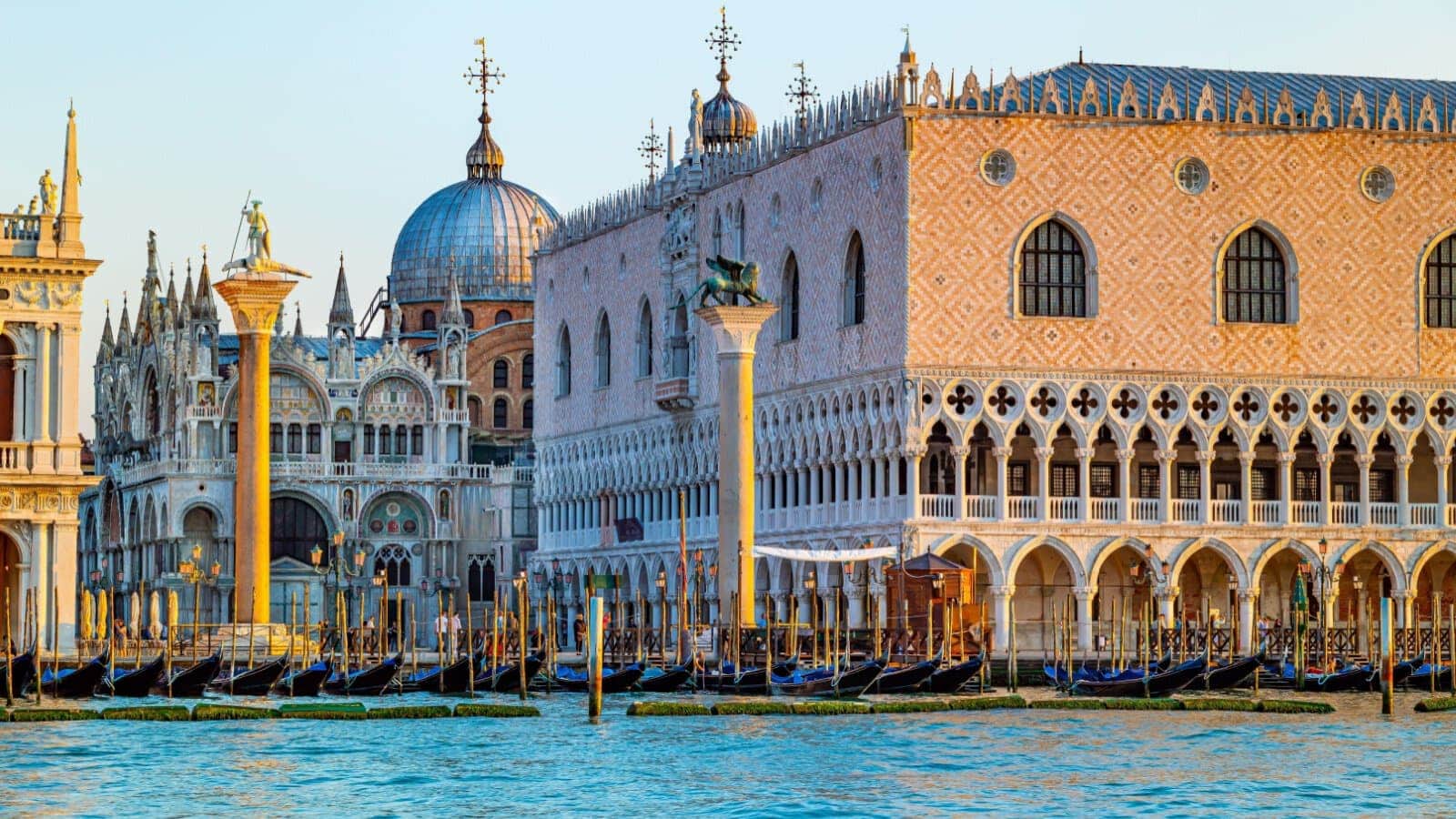
This might be the most mind-bending fact of all. According to Italy’s Ministry of Tourism, the total economic impact of the wedding on Venice was estimated at a staggering €957 million, or approximately $1.1 billion. But here’s the fascinating part: that number wasn’t primarily from the couple’s spending. A whopping 90% of that value—around €896 million—came from global media exposure and PR for the city. The actual expenditure on venues, services, and guests accounted for a much smaller slice.
To put that $1.1 billion figure in context, it represents 68% of Venice’s typical annual tourism revenue, all generated from a single weekend. It’s more than the economic impact of the 2024 Super Bowl in Las Vegas. Italy’s Minister of Tourism, Daniela Santanchè, celebrated it, saying, “This is not just a private event, but a concrete driving force for the entire sector.”
This reveals a profound paradox that explains the local anger. While the city’s “brand” received a massive PR boost, the tangible, trickle-down benefit to the average Venetian was likely minimal. The economic benefit was largely abstract and long-term. At the same time, the disruption—the security, the blocked-off canals, the feeling of being an extra in someone else’s movie—was very real and immediate. This clash was inevitable because the city’s government was celebrating a global PR win, while residents were protesting the impact on their local quality of life.
Giving Back: Donations Instead of Gifts

In a gesture befitting their status, the couple asked their ultra-wealthy guests to donate to charity instead of bringing gifts. Bezos and Sanchez led the charge by donating 3 million euros to three different Venetian organizations. The donations were allocated to CORILA for research on the Venetian lagoon ecosystem, the UNESCO Venice Office for the preservation of cultural heritage, and Venice International University for research on sustainable education.
However, the $3.6 million donation was met with deep skepticism by many protesters. One local activist, Flavio Cogo, dismissed the gesture, stating, “Those donations are just a misery and only aimed at clearing Bezos’ conscience.”
This highlights the complex role of philanthropy in the age of extreme wealth. What a donor sees as a generous act, the public can see as cynical “conscience laundering.” The donation, while large in absolute terms, is minuscule relative to both the wedding’s cost (around 6%) and Bezos’s net worth. To critics, this disparity in scale makes the gesture feel performative rather than substantive.
Key Takeaway

So, what can we say? The Bezos-Sanchez wedding was more than just a party. It was a cultural event that perfectly captured the zeitgeist of our time: the rise of “loud luxury,” the deep and growing chasm between the ultra-wealthy and everyone else, and the complex dance of opulence, controversy, and public relations.
From a dress that took 900 hours to make to an economic impact that rivaled the Super Bowl, every single detail was a spectacle. It was a three-day performance of love, power, and wealth on a scale that we may not see again for a long, long time. It wasn’t just the wedding of the year; it was the wedding of an era.
Disclaimer – This list is solely the author’s opinion based on research and publicly available information. It is not intended to be professional advice.
You Might Also Like:

How To Stick To Your Holiday Budget and Avoid Debt: With the holiday season in full swing, many face high expenses. The anticipation of gift-giving, coupled with the desire to create unforgettable moments, often leads to the common tradition of seasonal spending, with the average holiday budget reaching a considerable sum.